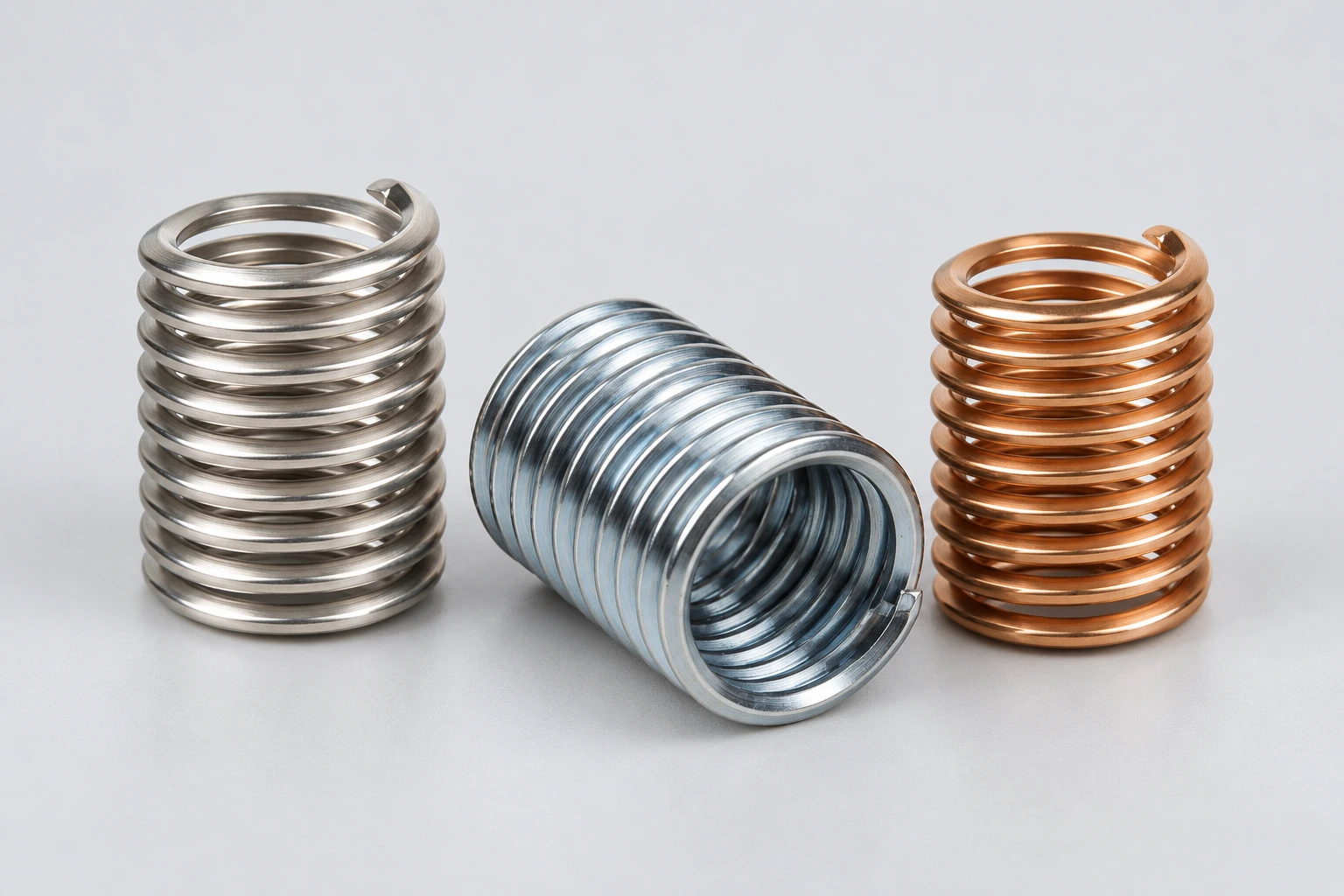
Material & product requirements
Identify alloy, condition, specification, batch and covered tests.
Explore →
QUALITY & SERVICE
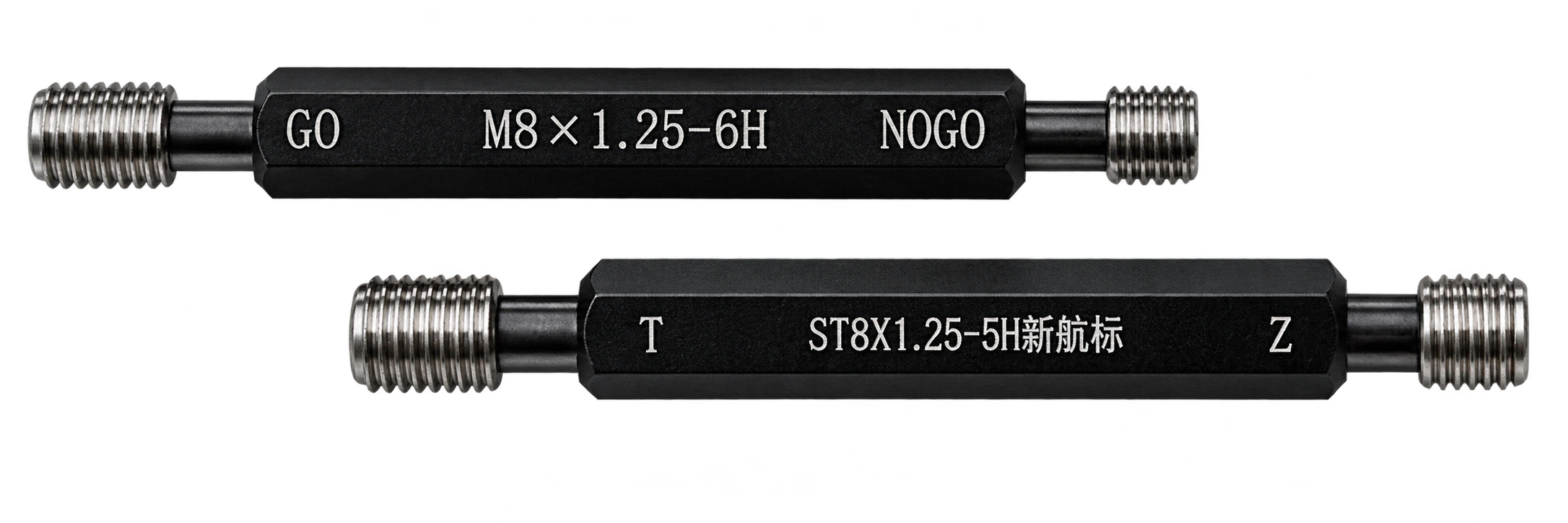
Standard threads and pre-installation STI receiving threads use different gauges. Package specifications, material and lot identifiers connect the product to its order and accompanying documents.
Identify alloy, condition, specification, batch and covered tests.
Explore →
Record the actual hole, tool, settings, samples and observations.
Explore →Use the corresponding gauges for standard threads and pre-installation STI holes; installed position and locking function are separate inspection items.
Explore →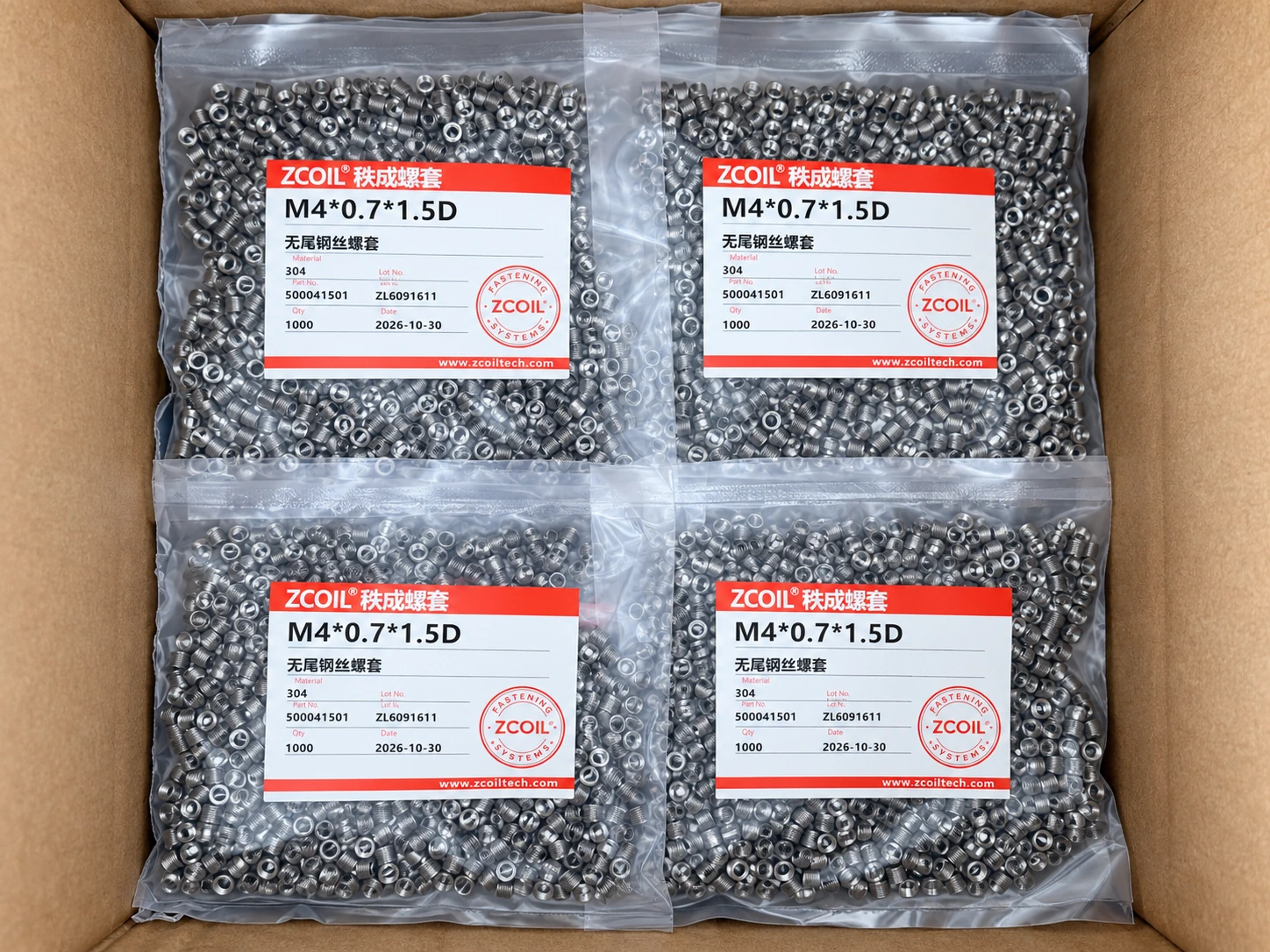
Package labels identify the specification, part number, quantity, material and lot for receiving and document matching.
Explore →PACKAGING & IDENTIFICATION
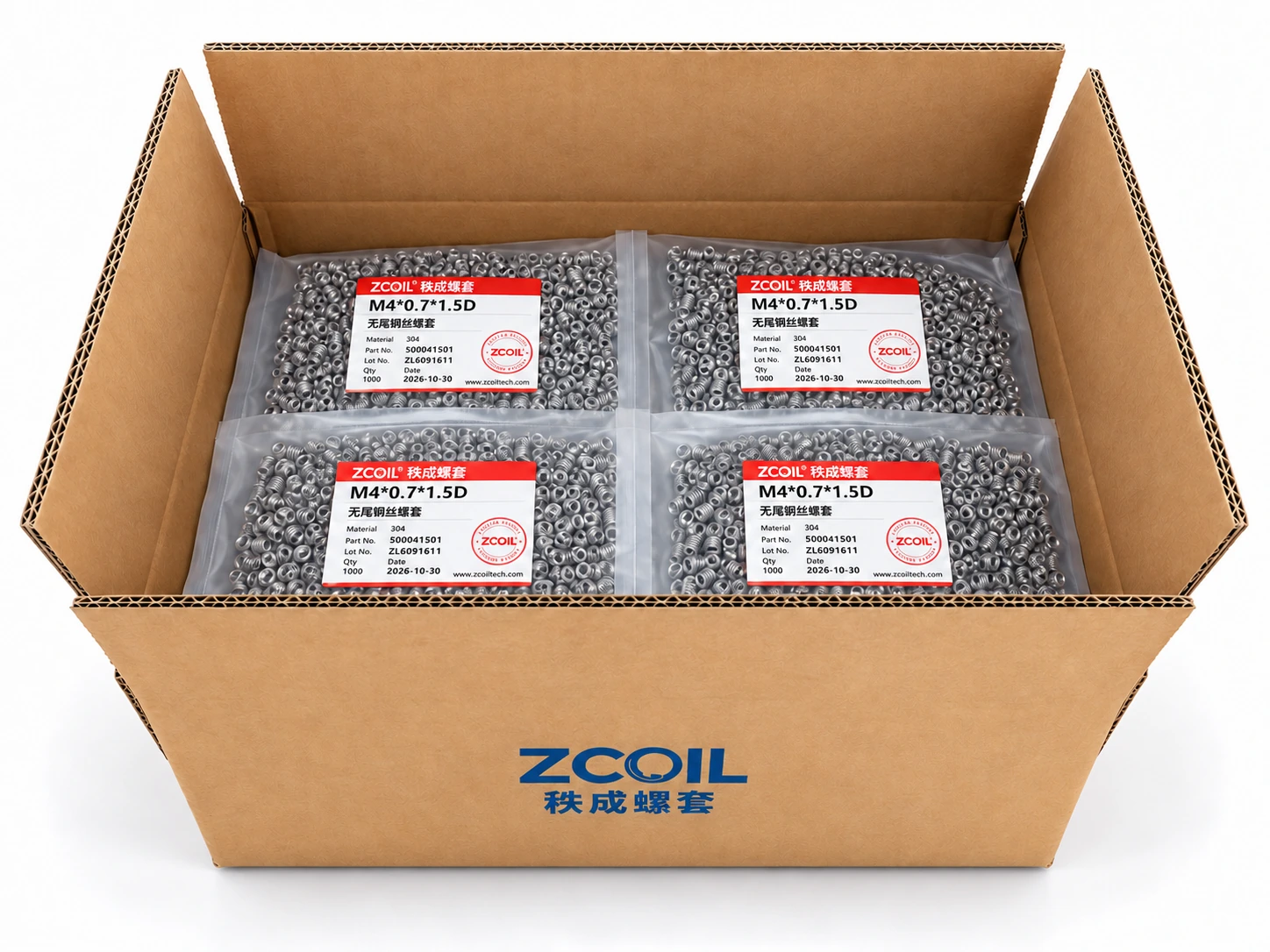
Inner labels identify the product and lot; the outer carton holds the bagged products together. Clear identification supports receiving, stock management and follow-up.
Bagged and boxed · M4 × 0.7 × 1.5D tangless insert example
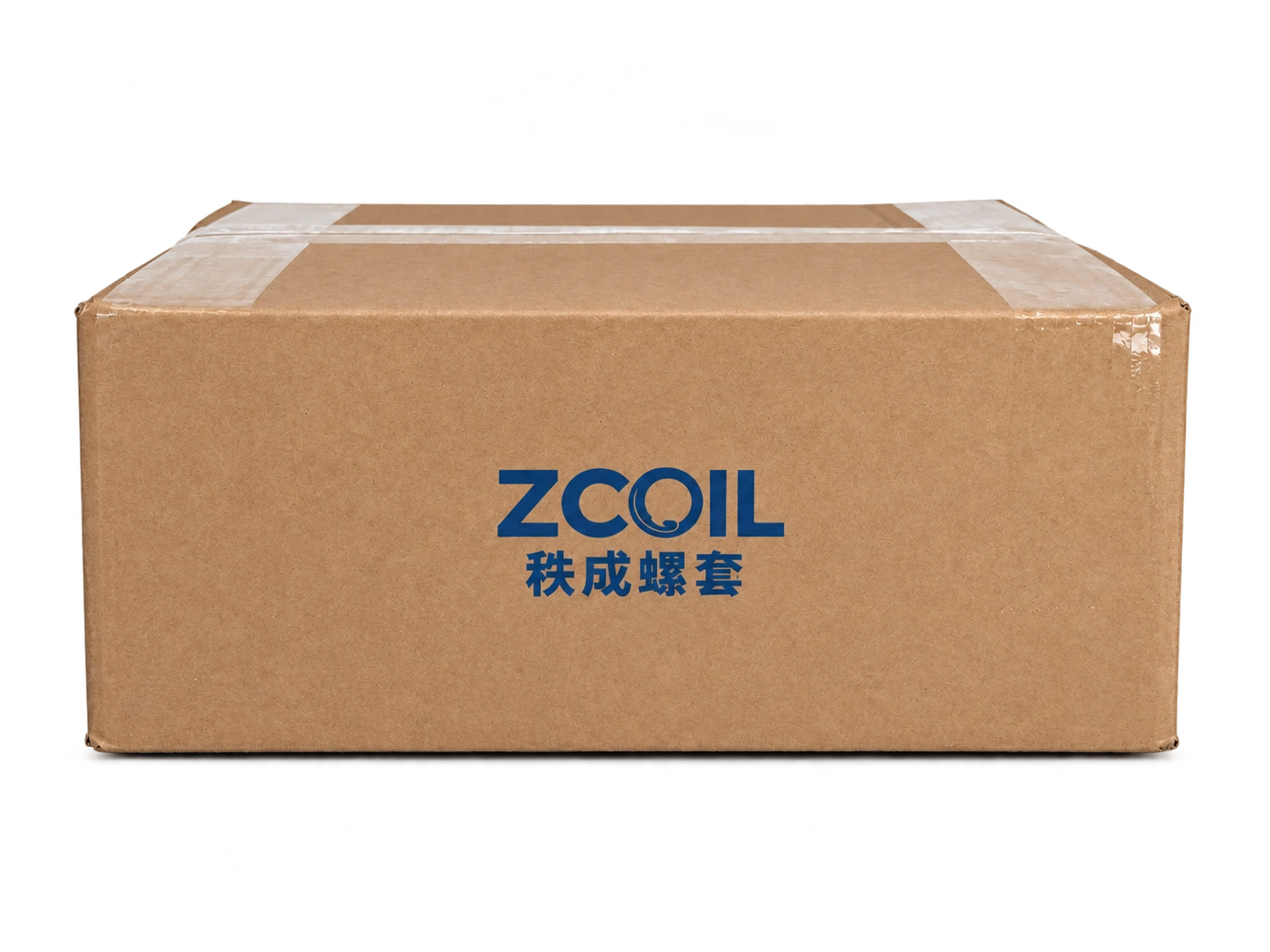
Branded outer carton · confirm quantity and shipping identification with the order
Check the thread size, length and part number for receiving, stock identification and repeat orders.
Keep the lot number and date with the order reference when requesting documents or reporting a product issue.
Confirm quantity, material and finish. Agree bag quantities, cleanliness and accompanying documents before ordering.
The example labels show 1,000 pieces per bag. Specification, bag quantity, carton configuration, labels and accompanying documents are confirmed with the order.
Public articles discuss selection and application conditions; they do not establish qualification for every environment. Discuss the documents, samples and project support required for your application.
LET’S TALK
Share a part number or drawing, quantity and target date to discuss configuration, tooling and supply requirements.